Looking Glass Studio
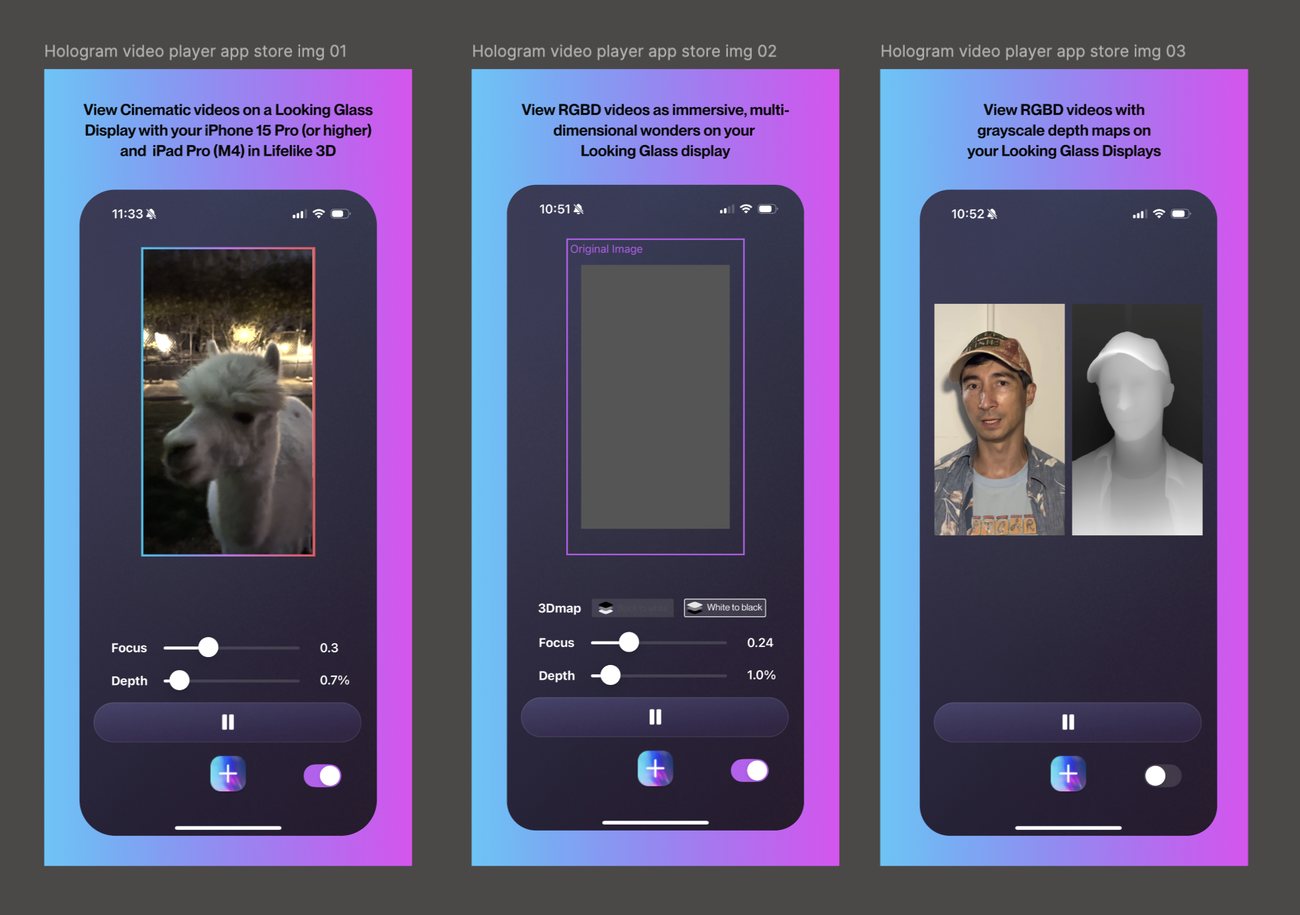
Studio is Looking Glass's universal player: point it at a video shot in iPhone Cinematic Mode, an RGB-D file, or a rendered Quilt, and it turns any of the three into a hologram on a Looking Glass display. No AI runs inside the app itself. Studio is the last stop for content generated everywhere else, and the design problem was making that handoff feel like one coherent product instead of three separate tools stitched together.
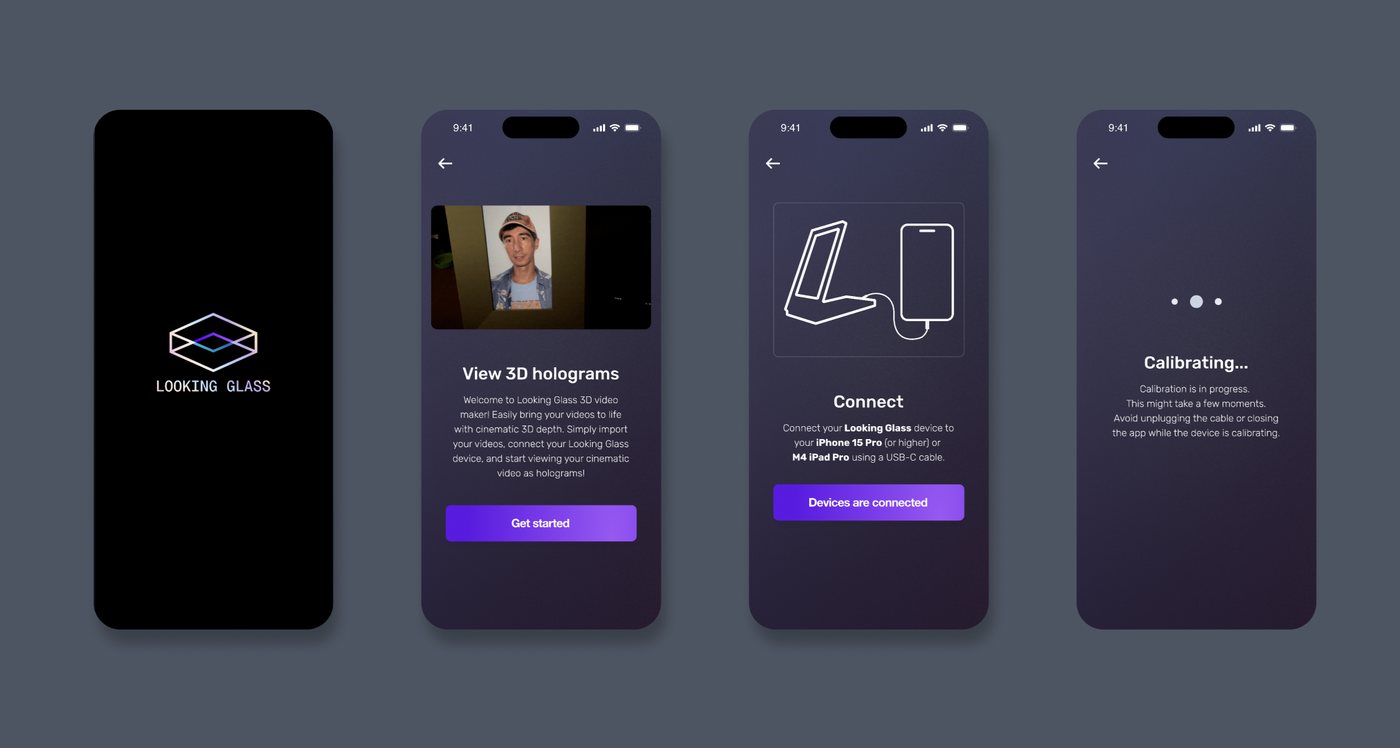
One player, three unrelated formats.
Cinematic, RGB-D, and Quilt come from entirely different pipelines and arrive at Studio looking nothing alike. The app's job is to make that invisible.
The AI doesn't live in the app.
Studio is deliberately a dumb, fast viewer. Every depth map it plays was generated somewhere else, by one of a handful of AI tools the Looking Glass community has standardized on.
Apple's on-device neural depth, built into the iPhone 15 Pro camera. No separate tool required: AirDrop or the Camera app hands Studio a video with depth already attached.
on-device, no export stepThe community's baseline depth model for a single photo. Older than the alternatives below, still the fastest way to get a usable grayscale depth map out of Hugging Face.
image, web or localThe newer recommendation for images with complex scenes: layered foregrounds, fine edges, cluttered backgrounds where Depth Anything tends to smear.
image, web or localDepth estimation for video rather than a single frame, keeping the depth map temporally consistent from one frame to the next instead of flickering.
videoA packaged desktop app wrapping the same class of model behind a drag-and-drop window: pick "RGB-Depth (Looking Glass)" as the export format and skip the Hugging Face and FFmpeg steps entirely.
app, video or imageDesigning for a format problem, not a feature problem.
Every real UI decision here traced back to hiding how different these three formats are under the hood.
What has to be true underneath.
The compatibility rules a viewer app can't hide from its users.
What carried over.
Three habits from this project that show up in every hardware-adjacent app since.
Name the scope, not the launch feature
Hologram Video was a fine name in 2023 and actively misleading a year later. Naming for where the product is headed costs less than a rename later.
A viewer can stay dumb on purpose
Keeping every AI step outside the app kept Studio fast and kept its failure modes simple: a bad depth map is the source tool's problem, not a crash in the player.
Compatibility copy is UI copy
"Requires firmware v1.0.59+" reads like a footnote, but it's the sentence standing between a user and their next successful pairing. It gets designed, not appended.