In Utero
In Utero is a spatial soundscape built to test a single design goal: can a listener be enveloped in sound from every direction, at once, in a way that reawakens memory rather than just narrating a scene. The piece runs on ambisonic and binaural audio layered around a six-beat story of pregnancy, panic, hospital, and quiet, designed as much to be studied as to be heard.
Open the mix in Google Drive · headphones recommended
The question.
Spatial audio can do more than sit behind a scene. The question was whether it could carry a story on its own.
Spatial and immersive audio already support real-time control over an experience and can hold up collaborative storytelling on their own, without a screen doing the narrative work. The question this project asked was how spatial audio specifically could open up new kinds of interaction in participatory, mixed-reality performance, not as an effect layered onto a visual scene but as the scene itself.
The design goal that followed was a sonic experience built around envelopment: a listener surrounded by sound from every direction, able to move through the piece from any perspective inside it. That goal is tied to anamnesis, a term for the way a sound or a sonic context can revive a past atmosphere in a listener's consciousness, often involuntarily. The piece isn't just meant to be heard, it's meant to reawaken something already there.
The story: six beats.
In Utero's storyboard is a six-beat arc, each beat defined entirely by what it sounds like, not what it shows.
Precedent, before the build.
Two pieces of history sit behind this project's premise: one score, one building.
John Cage's 1952 score Williams Mix organized 600 recordings into six categories, city sounds, country sounds, electronic sounds, manually produced sounds, wind-produced sounds, and small sounds requiring amplification, and let their combination, not any melody, carry the piece. Le Corbusier, Iannis Xenakis, and Edgar Varèse's Philips Pavilion at the 1958 Brussels World's Fair went further, fusing architecture, film, light, and music into what Philips itself described wanting as a platform rather than a hall. That bonding of media is often read as an early precedent for virtual reality: an immersive, multi-sensory installation built before the hardware to render it digitally existed.
Ambisonic and binaural, and why you need both.
One format renders a full sphere of sound for any speaker array. The other tricks two ears into hearing one. In Utero runs on both.
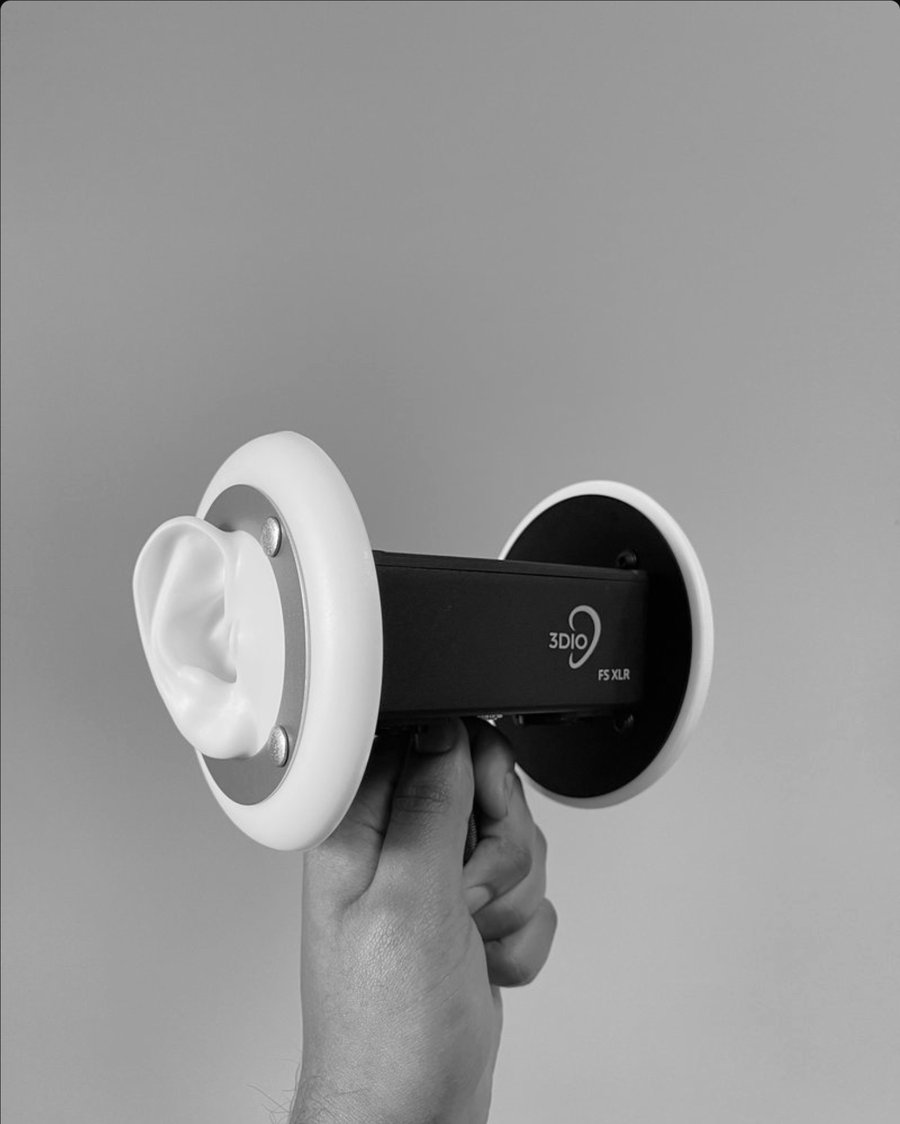
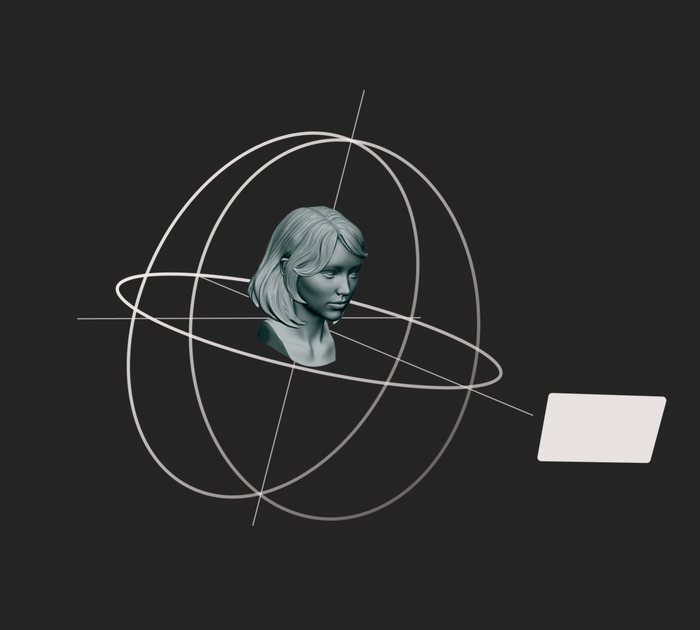
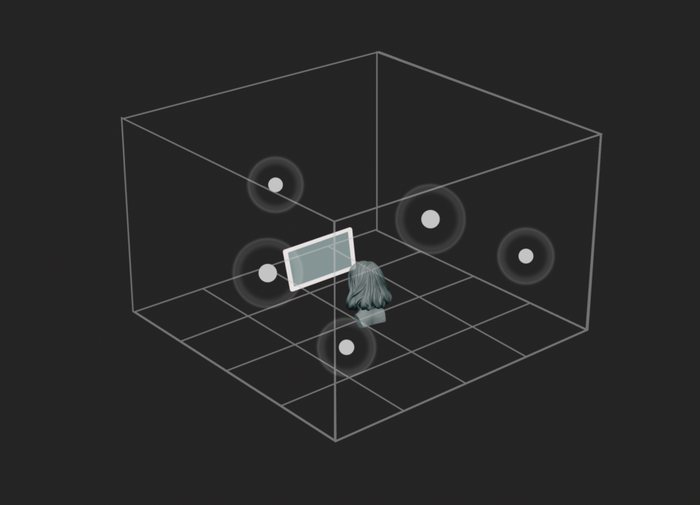
Ambisonic audio is speaker-agnostic: rather than assigning a recording to a channel, it places a sound source on the surface of a spherical soundfield and encodes that sphere into a b-format signal, where each channel carries one spherical harmonic. First-order ambisonics needs four channels; each order up adds more. Binaural audio works differently and only for headphones, filtering a sound through head-related transfer functions so two ears perceive a source's exact location and elevation, the same illusion your own ears perform on real sound without any processing at all. Combining both, an ambisonic soundfield decoded for speakers and a binaural mix for headphone playback, was the hybrid approach this project used to make the piece hold up across playback systems.
The rig.
The hardware and software that turned two theories of sound into one mixed piece.
Ideation started with a notebook, not a plugin.
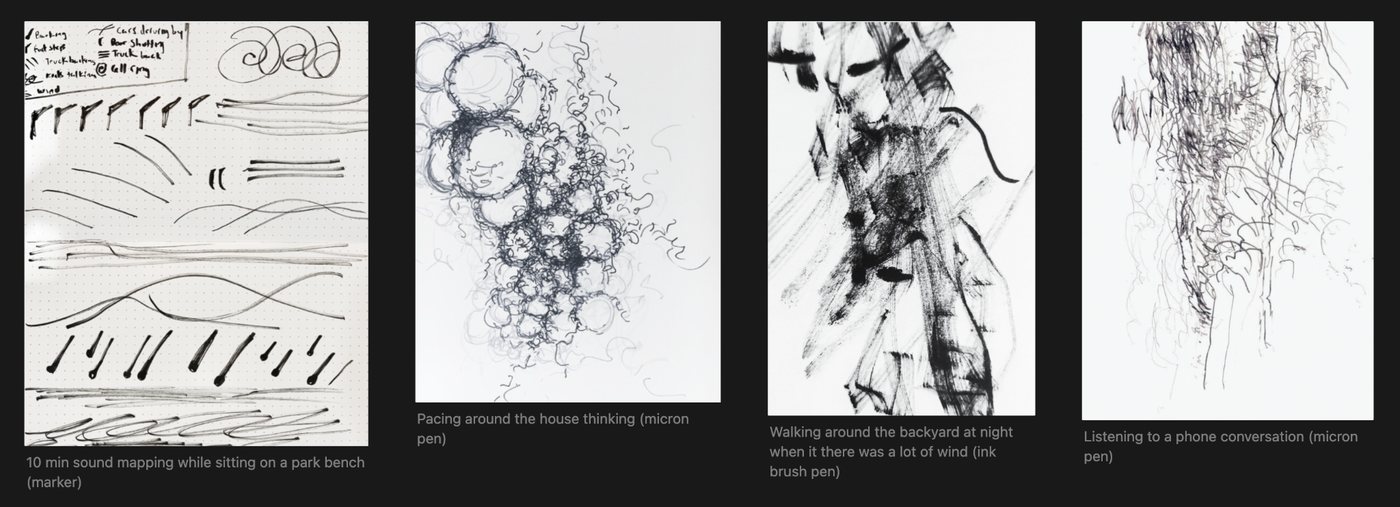
Before any of the rig got touched, the ear got trained by drawing what it heard.
Each sketch below is a timed listening exercise, translating an everyday sound environment into a gesture on paper before it ever became a mix decision. Ten minutes on a park bench, pacing around a house, walking a windy backyard at night, half a phone conversation overheard, each drawn the way it was heard, not the way it looked.
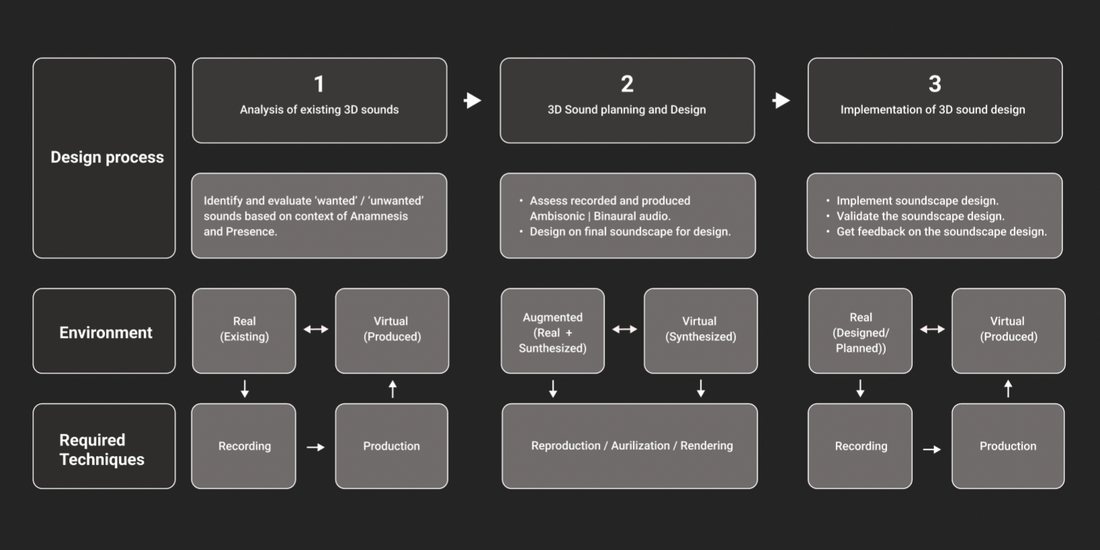
The workflow.
A three-stage process, each stage run against both a real and a virtual version of the same environment.
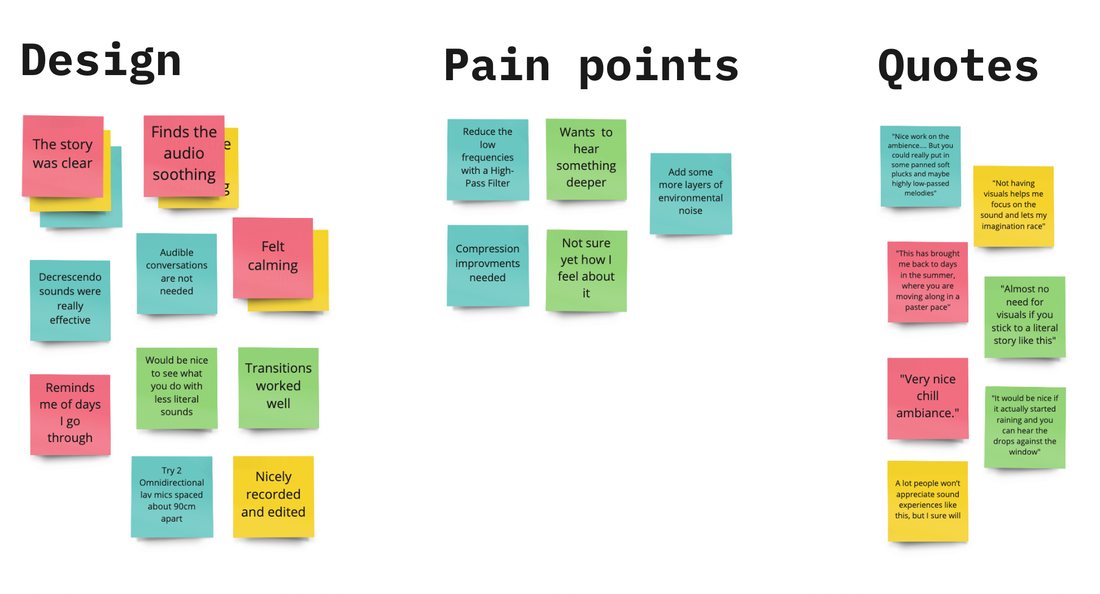
Five listeners, one affinity map.
Usability testing for a soundscape doesn't ask people to click anything. It asks them what they felt, and sorts the answers by hand.
What carried over.
Three habits from a six-month sound-design studio that outlasted the project itself.
Draw the sound before you mix it
The ephemeral sketches weren't a warm-up exercise, they trained an ear for gesture and texture before a single fader got touched.
Test the feeling, not the feature
An affinity map of quotes and pain points said more about whether the piece worked than any technical playback metric would have.
Build for two playback systems, always
Designing the ambisonic mix and the binaural mix together, instead of one and then a fallback, is what let the piece hold up on a speaker array and a pair of headphones alike.